
When most people think about heart health, they immediately think about what to stop eating. Cut the sodium. Ditch the butter. Say goodbye to red meat.
But here’s what doesn’t get talked about nearly enough: some of the most powerful things you can do for your heart have nothing to do with restriction. They’re about addition — specifically, adding the right foods that actively protect your arteries, reduce inflammation, and in some cases, help clear out plaque that’s already there.
That last part is worth repeating. Some of these foods don’t just slow the problem down — research suggests they can actually help reverse it.
Here are nine foods worth making room for on your plate.
1. Liver
Yes, liver. Stay with us here. Liver is one of those foods that gets a bad reputation for all the wrong reasons, and it’s a shame, because from a pure nutritional standpoint, almost nothing else comes close. It’s loaded with CoQ10, which your heart muscle depends on to produce energy. It’s packed with B vitamins that help lower homocysteine — a compound that, when elevated, directly damages artery walls and accelerates plaque formation. It also contains copper and vitamin A in amounts you’d struggle to match from any other single food.
If beef liver is too strong for your taste, chicken and lamb livers are noticeably milder. Diced and tucked into a stew, curry, or shepherd’s pie, you’d barely know it was there. Look for grass-fed when you can since the nutritional profile is meaningfully better.
2. Sardines
Sardines are loaded with omega-3 fatty acids, vitamin D, and CoQ10. More importantly, they are virtually always wild-caught. There’s no sardine farming industry to worry about, so you’re not dealing with the inflammatory omega-6 imbalance that makes farmed fish a problem. Omega-3s are critical for heart health because they reduce triglycerides, lower inflammation in the artery walls, and help slow plaque build up over time. Canned sardines in olive oil or water are perfectly fine. Just steer clear of the varieties packed in soybean oil. Toss them on crackers, into a salad, or eat them straight out of the tin if you’re not squeamish about it.
3. Spinach
Spinach is rich in vitamin K, and that matters enormously for your arteries. Vitamin K helps prevent calcium from depositing inside artery walls, which is a major component of hardened plaque. It’s also high in dietary nitrates, which your body converts into nitric oxide, a molecule that relaxes and widens blood vessels and helps keep blood pressure in check. Throw in the magnesium and folate content, and spinach is quietly one of the most heart-protective vegetables you can eat. Raw in salads retains the most nutrients, and if you’re not a fan of the texture, a handful blended into a smoothie disappears completely.
4. Garlic
Your grandparents probably swore by garlic for just about everything. Turns out, they were onto something real. The active compound in garlic is called allicin, and it has some genuinely impressive cardiovascular effects, like lowering LDL cholesterol, reducing blood pressure, and preventing the kind of blood clotting that leads to heart attacks and strokes. But what makes garlic particularly interesting in the context of artery health is its direct anti-plaque activity. Some research has shown that regular garlic consumption can slow plaque growth by a significant margin, and in some studies, even reduce existing deposits.
One tip worth knowing: if you chop or crush garlic and let it sit for about ten minutes before cooking, you activate more of the allicin. Raw garlic is the most potent form if you can handle it. If not, lightly cooked still delivers meaningful benefits.
5. Beets
Beets are one of the most underrated heart foods out there, and most people aren’t eating nearly enough of them. They’re packed with dietary nitrates that help lower blood pressure and reduce stress on artery walls. But beets also contain something called betaine, which directly lowers homocysteine levels (remember, elevated homocysteine damages the arterial lining, paving the way for plaque). Add in betalain antioxidants, which have strong anti-inflammatory properties, and you’ve got a genuinely powerful package.
Roasted beets are delicious and easy to prepare. Beet juice has been the focus of most of the blood pressure research and is worth adding if you want a concentrated dose. Just make sure it’s pure juice with no added sugar, not a beet “cocktail.”
6. Brussels Sprouts
Brussels sprouts, like spinach, are rich in vitamin K — which, as we’ve established, plays a direct role in preventing calcium buildup in your arteries. They also contain glucosinolates, compounds with potent anti-inflammatory effects that help protect the arterial walls from the chronic irritation that leads to plaque. On top of that, they’re high in fiber and vitamin C. The key to actually enjoying Brussels sprouts is all in the preparation. Roast them at high heat, around 425°F, with a bit of olive oil and sea salt until the outer leaves get crispy. The bitterness that gives them a bad reputation basically disappears, and what’s left is something closer to a nutty, caramelized vegetable that’s hard to stop eating.
7. Almonds
Don’t underestimate what a small handful of almonds does for your heart. Almonds are one of the best food sources of vitamin E, which prevents LDL cholesterol from oxidizing. This matters because it’s not really LDL itself that causes the problem, it’s oxidized LDL that sticks to artery walls and kicks off the plaque-building process. By stopping oxidation at the source, vitamin E helps interrupt that chain of events before it starts.
Almonds also provide monounsaturated fats, magnesium, and plant-based protein, making them one of the most complete heart-healthy snacks you can reach for. Raw and unsalted is the way to go. Almond butter works too, just check the label and make sure there’s nothing added beyond almonds (and maybe a pinch of salt).
8. Green Tea
Green tea is rich in catechins, particularly one known as EGCG, which are among the most well-studied antioxidants. EGCG reduces LDL oxidation, lowers blood pressure, eases inflammation, and improves how flexible and responsive your arteries are. But perhaps most impressively, some research suggests it can actually disrupt the protein structures that form arterial plaque, making it one of the very few food compounds with direct evidence for working against existing plaque, not just preventing new buildup.
Two to three cups a day appears to be where most of the benefit shows up in studies. Steep at a lower temperature — around 175°F rather than a full boil — to preserve the catechins. And if you want an even more concentrated dose, matcha is made from the whole tea leaf and delivers several times the EGCG of a regular brewed cup.
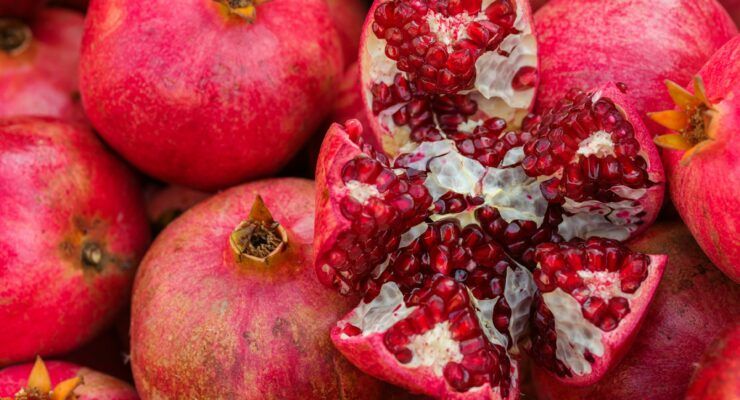
9. Pomegranate
We saved the most impressive one for last. Pomegranate contains a class of antioxidants called punicalagins that are extraordinarily potent, roughly three times more powerful than those found in red wine or green tea. They reduce LDL oxidation, lower blood pressure, and fight inflammation throughout the cardiovascular system. But what makes pomegranate genuinely remarkable is what the research shows about artery plaque specifically.
One landmark study followed participants who drank pomegranate juice daily for a year. The results were striking: the pomegranate group saw carotid artery plaque decrease by up to 30%, while the control group’s plaque actually increased by 9% over the same period. That kind of reversal, from a food, not a drug, is rare and worth paying attention to.
Pure pomegranate juice with no added sugar is your best option. Eating the seeds directly is great too. Just avoid pomegranate cocktails or blended fruit drinks since they’re mostly sugar and deliver very little of what actually matters.
Even adding two or three of these foods consistently can make a meaningful difference over time. Heart disease is largely a diet-driven condition, which means it’s also, in large part, a diet-solvable one.