

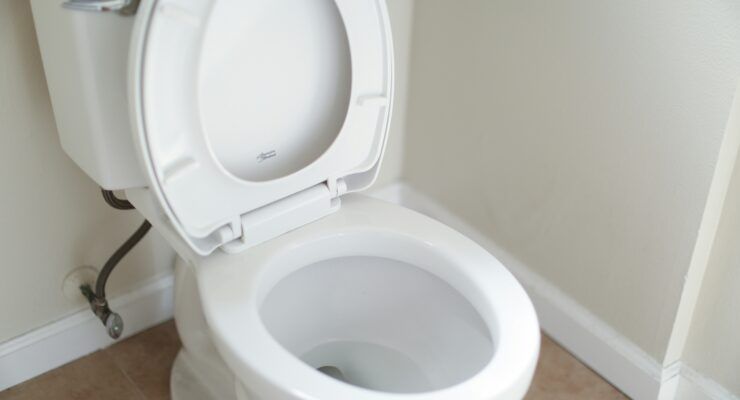
Public restrooms make most women uncomfortable — and hovering over the seat has become almost second nature. It feels cleaner, safer, more hygienic. But here’s the problem: hovering may actually be doing more harm to your bladder and pelvic floor than simply sitting down.
Here’s what’s really happening when you hover — and what to do instead.
What Hovering Actually Does to Your Body
When you squat and hover over a toilet seat, your pelvic floor muscles don’t fully relax. They stay partially engaged, almost braced, because your body is holding a physical position mid-air.
For your bladder to empty properly, those muscles need to let go completely. When they can’t, you’re often forcing urine out against resistance — straining without realizing it — or leaving urine behind in the bladder.
Over time, this can contribute to incomplete bladder emptying, increased urgency, pelvic floor tension, and a higher risk of UTIs from residual urine sitting in the bladder.
The Hygiene Argument Doesn’t Hold Up
The reason most women hover is fear of germs. But research consistently shows that toilet seats are not a significant route of transmission for most infections. The bacteria that cause UTIs — primarily E. coli — come from your own body, not the seat beneath you.
Ironically, the hovering habit that’s meant to protect you may actually be increasing your UTI risk by preventing full bladder emptying.
What Incomplete Emptying Does Over Time
When urine isn’t fully cleared from the bladder, bacteria have more opportunity to grow. This is one of the reasons some women experience recurring UTIs despite doing everything else right — their bladder never fully empties because of how they use the bathroom.
Chronically incomplete emptying can also stretch the bladder over time, disrupt its signaling, and contribute to urgency and frequency issues that feel a lot like an overactive bladder.
The Hovering-Pelvic Floor Connection
Your pelvic floor is a group of muscles that supports your bladder, uterus, and bowel. They need to contract and release properly to maintain bladder control, continence, and comfort.
Hovering keeps them in a state of low-level tension. If you hover regularly — at work, in restaurants, at the gym — you may be training your pelvic floor to stay guarded rather than release fully. Over time, a chronically tight pelvic floor can be just as problematic as a weak one, contributing to difficulty emptying, pelvic pain, and worsening bladder control.
So What Should You Do Instead?
Sit down. If the seat concerns you, use a paper seat cover or a few sheets of toilet paper. These create a barrier while still allowing you to sit fully and relax your pelvic floor the way it needs to.
When you sit, try to:
Keep your feet flat on the floor. Lean slightly forward with your hands on your knees. Relax your stomach and pelvic floor completely. Don’t push or strain — let your bladder empty on its own. Take your time and make sure you feel fully empty before standing.
This position allows your bladder to decompress naturally and your pelvic floor to release without tension.
What About Squatting?
True squatting — heels on the floor, knees above hips — is actually considered by many pelvic floor specialists to be an optimal position for full bladder and bowel emptying. It’s very different from the half-crouch hover most women do in public restrooms.
If you’re interested in this, a small step stool at home (often marketed as a squatty potty) can replicate this position and may support more complete emptying over time.
Hovering feels protective but it works against your body. Your pelvic floor needs to fully relax for your bladder to empty properly, and that can’t happen when your muscles are braced holding you up.
The cleanest thing you can do for your bladder health in a public restroom isn’t to hover — it’s to sit down, relax, and give your body the chance to do its job properly.